
Your next best customer is out there right now, researching your competitors.
They’re comparing solutions. Reading reviews. Maybe even narrowing down their shortlist.
And you have no idea they exist.
By the time they contact you (if they contact you at all), they’ve already made 60-70% of their buying decision. They’ve formed opinions. They’ve eliminated options. They might have already decided you’re not the right fit based on incomplete or outdated information they found online.
This is the invisible buyer problem. And it’s quietly killing your pipeline.
The Stakes Are Higher Than You Think
When buyers research without you in the room, three things happen:
You lose control of the narrative. Buyers are forming opinions based on whatever they can find. Old case studies. Vague product descriptions. Competitor messaging. Your own outdated website. You’re not there to correct misunderstandings or highlight what actually matters.
You miss entire buyer segments. Some buyers never raise their hand because they assume you’re too expensive, too complex, or not the right fit. They self-eliminate before you ever know they were looking. Those lost opportunities don’t show up in your CRM.
You only see late-stage buyers. By the time someone contacts you, they’ve already narrowed their options. You’re competing in a three-horse race you didn’t know you were in. And one of those horses got a head start.
Traditional B2B sales assumes buyers know to call you. That assumption no longer holds.
The Content Trap
Most companies respond to this by creating more content.
More blog posts. More whitepapers. More case studies. Better SEO. LinkedIn posts. Trade show follow-ups.
These help with awareness. They make you findable. But they don’t help buyers make progress.
And that’s the real problem.
Buyers don’t just want information. They want to advance their decision. They want to know if you’re a fit. They want to understand pricing. They want to see what a solution would actually look like for them.
A product brochure doesn’t help me configure a solution. A case study doesn’t tell me pricing. A spec sheet doesn’t show me what would actually work for my situation.
Content makes you visible. But it doesn’t make you useful.
What Showing Up Earlier Actually Means
Showing up earlier isn’t about being present. It’s about being useful when buyers need you most.
Early-stage buyers need three things:
Clarity. Can I understand what you offer without calling? Not just what you do, but what I would actually get. What does the product look like? What are my options? What’s included?
Comparability. Can I see if you’re in my ballpark? Price range. Scope. Complexity. Lead time. If I can’t figure out whether you’re even relevant to my situation, I’m moving on.
Progress. Can I take a real step forward? Not download another spec sheet. Not call sales just to get basic pricing. Not submit a quote request before I even know what I’m asking for.
If you can’t provide these, buyers either move on to someone who can, or they call you way later in the process after they’ve already narrowed their options.
Showing up earlier means letting buyers self-educate and self-qualify before they ever talk to sales.
A Real Example: When Glaston Met Invisible Buyers
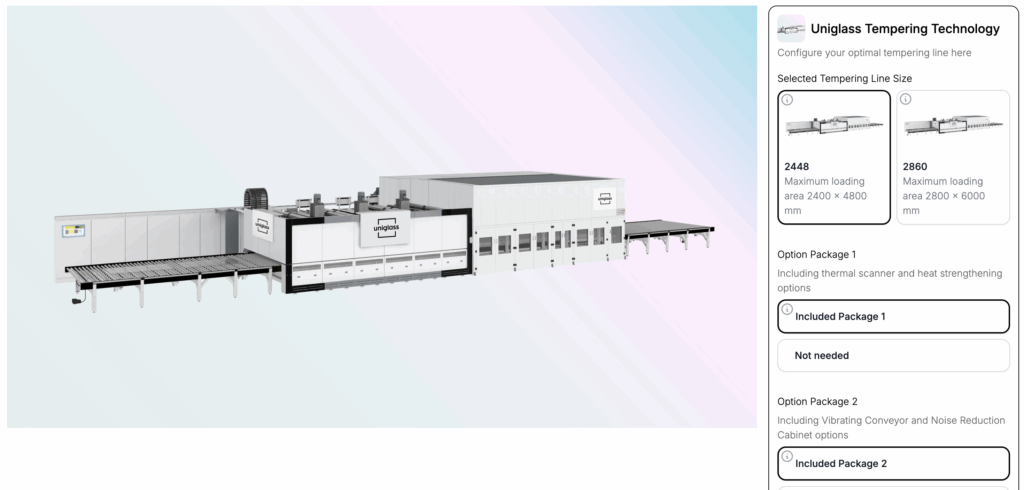
Glaston is a global leader in glass processing machinery. Premium products. Strong brand. Long-term customer relationships built through direct sales, exhibitions, and local agents.
It worked. But only for buyers who already knew to call.
The problem? Their core premium segment wasn’t growing. And the traditional sales model wasn’t designed to reach new segments or new markets efficiently.
So they did something different.
In three months, they launched Uniglass by Glaston. A digital-first brand with a complete online sales experience. Buyers could configure their own glass processing line, see how it would fit their factory layout, choose options, and get an instant price indication. No rep required to start.
Then they could request an official quote from sales.
The result? Ten quote requests in the first week.
Not from existing buyers working with agents. From new buyers who never would have called. Buyers exploring a new purchase. Buyers in markets where Glaston didn’t have strong local presence. Buyers who wanted to understand their options before engaging with a salesperson.
These weren’t tire-kickers. They were qualified leads who had already:
- Understood the product
- Configured what they needed
- Seen transparent pricing
- Decided to move forward
Sales got better leads, earlier in the process, without adding headcount.
“When you go to a new market, you need to prove you are serious,” said Miika Äppelqvist, Glaston’s CEO. “A nice website alone doesn’t do it. What makes the launch fast and interesting is giving more information. And price is the most interesting thing for buyers.”
Glaston didn’t just add more content. They added a way for buyers to make progress without needing sales. That’s what changed the game.
Read the full Glaston case study →
What This Looks Like in Practice
If you’re a sales leader, here’s what matters:
Digital doesn’t replace your reps. It extends your reach to buyers you’d never see otherwise. You get fewer cold leads and more buyers who’ve already qualified themselves. They know what they want. They know they’re in the right ballpark. Your team spends time closing, not educating.
If you’re a marketing leader:
Stop treating digital as just a way to get noticed. Start treating it as “how buyers make progress when we’re not in the room.” Your job isn’t just to drive awareness. It’s to help buyers advance their decision before they ever contact sales.
What does “showing up earlier” actually require?
Transparent information. Including pricing or pricing ranges. Yes, even if competitors might see it. (They already know your rough pricing anyway. And buyers save everyone time by knowing if you’re in their budget.)
Self-service tools. Configurators. Product finders. Pricing calculators. Something buyers can actually use to see what a solution would look like for their specific situation.
Fast execution. Months, not years. You don’t need to rebuild your entire sales process. You need to launch something fast and learn from real buyers.
You don’t need perfection. You need progress.
The Question That Matters
Your buyers are already online. They’re already researching. They’re already comparing.
The question isn’t whether they start their journey without you.
The question is: Are you there when they do?
Most B2B companies aren’t. That’s the opportunity.
Because if buyers can’t make progress on your website, they’ll make progress somewhere else.